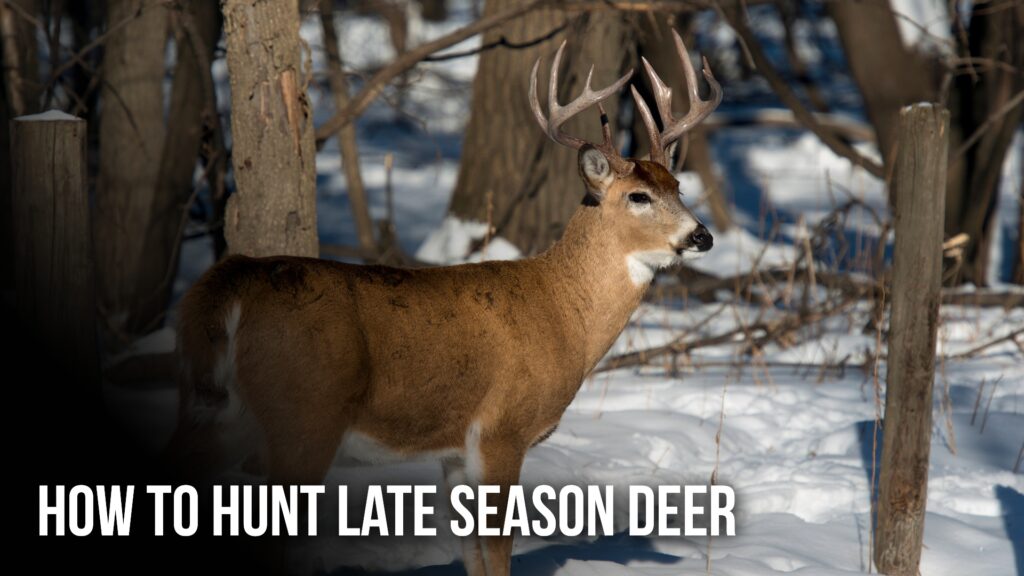
Late-season deer hunting is a completely different game than pre-rut or rut hunting. By this time, bucks have seen it all—they’ve survived hunters, harsh weather, and the pressure of the season. They’re smart, cautious, and often moving on their own schedule. Success in the late season comes down to patience, pattern recognition, and taking advantage of their changing habits. Unlike earlier in the year, food becomes the primary driver, and mature bucks are less predictable but more committed to conserving energy while still needing to feed.
Food is king during the late season. Bucks are less likely to be chasing does and more focused on high-calorie sources to survive the cold. Acorns, agricultural fields, and thick browse areas are hotspots, especially when natural mast has been depleted. Observation is key: watch where deer are feeding and look for sign of bedding nearby. Bucks will often select bedding areas that are close to food but offer maximum security from pressure. Understanding this balance can help you find both the routes they use and the places they feel safe.
Hunting late-season deer also requires thinking about terrain and thermals. Mature bucks tend to move along funnels, saddles, drainages, and benches to minimize exposure while traveling between bedding and feeding areas. Cold air and thermal inversions can affect movement, pushing deer to travel at unusual times or along different routes. Positioning yourself strategically along these natural funnels—and considering wind direction—can dramatically increase your chances of intercepting a wary buck.
Trail cameras and fresh sign are invaluable tools at this stage. Scrapes, rubs, tracks, and even droppings help confirm which areas are still active and which bucks remain in the zone. Late-season hunting rewards hunters who are flexible: setups may need to change from one week to the next based on shifting patterns, pressure, and weather conditions. Observing these cues and adjusting accordingly is far more effective than sticking to a single stand or strategy.
Ultimately, hunting late-season deer is about strategy, observation, and respecting the maturity of your quarry. These are smart, cautious bucks who require a thoughtful approach. By focusing on food sources, bedding areas, travel funnels, and thermals—and combining that with careful observation and adjustment—you can outsmart even the wisest whitetails and close the season with success.