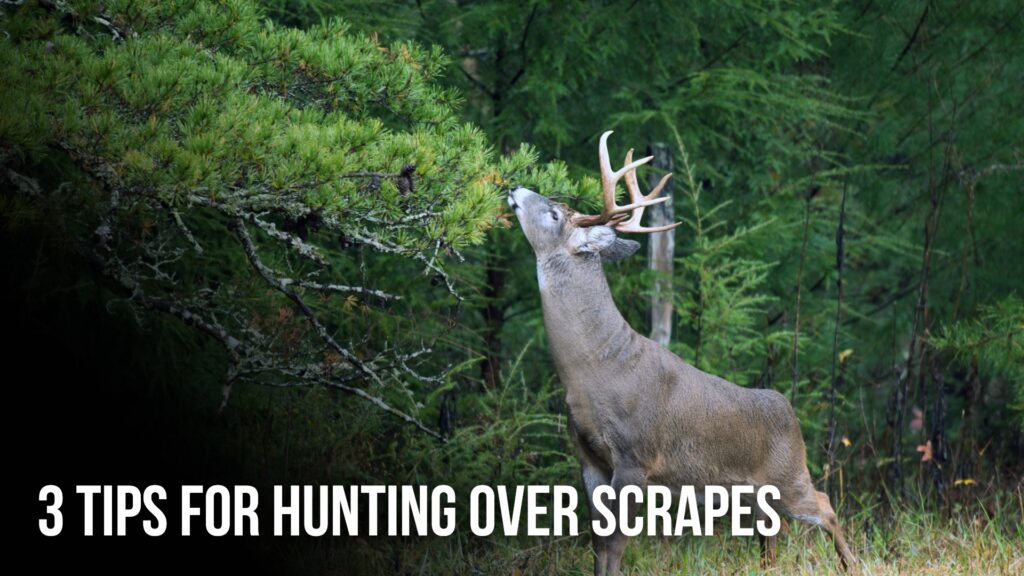
If you’re serious about hunting mature whitetails, understanding primary scrapes is a game-changer. These aren’t just random markings; they’re communication hubs where bucks exchange scent, check estrous activity, and establish dominance. John Eberhart, a seasoned bowhunter with over 50 record-book bucks, emphasizes that primary scrape areas are often located in spots with heavy deer traffic, making them prime locations for intercepting cruising bucks during the rut.
1. Identifying Primary Scrapes
Not all scrapes are created equal. Primary scrapes stand out because they’re repeatedly used year after year and are often larger, deeper, and more centrally located within a buck’s travel corridor. Look for areas with multiple scrapes clustered together, often under overhanging branches or along well-worn trails. In contrast, random scrapes tend to be smaller, shallow, and scattered in low-traffic areas, usually created by younger or transient bucks. Focusing on the primary scrapes—the ones the dominant bucks consistently return to—gives you a much higher likelihood of encountering a mature whitetail.
2. Strategic Stand Placement
To capitalize on primary scrapes, position your stand downwind of these areas, ideally near travel corridors leading to bedding or feeding zones. Eberhart advises that cruising bucks will often stop at these scrapes to scent-check for estrous does. By setting up in these high-traffic zones, you increase your chances of an encounter.
3. Timing and Approach
Timing is crucial when hunting primary scrapes. Eberhart notes that bucks are most active around these scrapes during the early morning and late evening hours. Approach your stand quietly and avoid disturbing the area to maintain the integrity of the scrape. By understanding and utilizing primary scrapes, you can significantly enhance your chances of harvesting a mature whitetail.