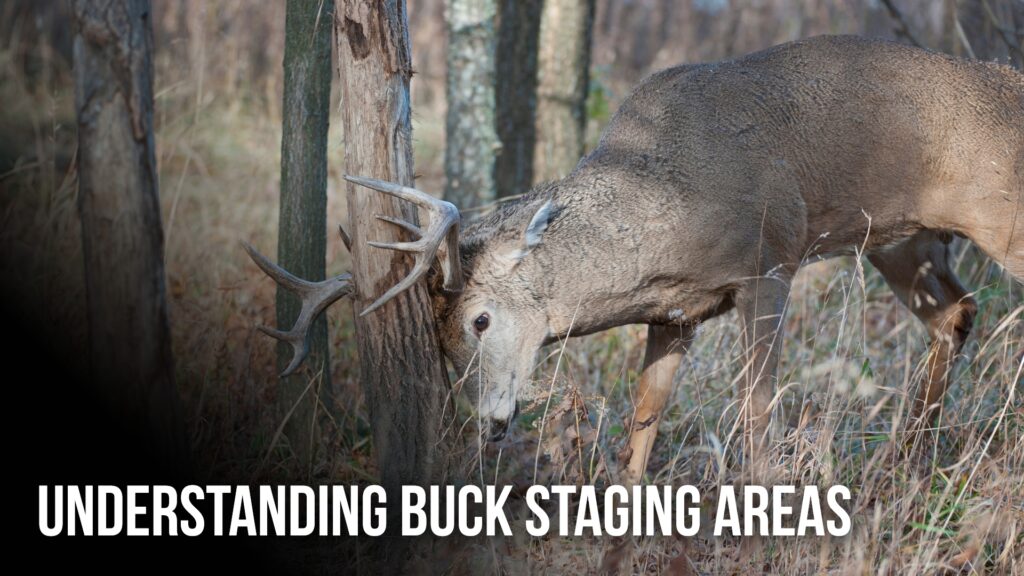
Buck staging areas are some of the most overlooked yet productive spots during the hunting season. These are the zones where mature bucks pause between feeding, bedding, and rutting activity. Think of them as the “rest stops” on a deer’s daily route. Bucks use staging areas to catch their breath, assess their surroundings, and move safely between critical parts of their range. Understanding where these areas are—and how to hunt them—can give you a major advantage over other hunters.
Identifying staging areas requires a mix of observation and scouting. Look for natural funnels, saddles, ridgelines, or pinch points that connect feeding areas to bedding zones. These areas often have multiple signs of use: rubs, scrapes, tracks, or even trails that show repeated deer movement. Mature bucks are creatures of habit, so the areas they stage in tend to be consistent year after year. Trail cameras are a great way to confirm these zones without disturbing them, giving you insight into which bucks are using the staging area and when.
The timing of movement through staging areas is crucial. Bucks often pass through early in the morning and late in the evening, but during the pre-rut and rut, midday movements can also occur. Andrae D’Acquisto and Dan Infalt both stress that these transitional areas are often where mature bucks are most vulnerable—they’re moving with purpose but still cautious. By positioning yourself strategically along funnels or bedding approaches that feed into the staging area, you can intercept them without spooking the deer.
Hunting staging areas requires patience and stealth. Mature bucks are smart, and they can detect disturbance long before they come into range. Avoid approaching these areas directly; instead, use natural breaks in the terrain, ridgelines, and cover to keep your scent and movement hidden. Pay attention to wind and thermals—an otherwise perfect setup can be blown if a buck catches your scent. Observation, combined with careful placement, is key to taking advantage of these critical zones.
Ultimately, staging areas are where mature bucks reveal their routines without fully committing to feeding or rutting behavior. By learning to locate these zones, observing deer traffic, and positioning yourself thoughtfully, you increase your chances of intercepting the most cautious and intelligent bucks. Hunting these areas isn’t about luck—it’s about understanding the deer’s patterns and thinking strategically, giving you the upper hand when it matters most.